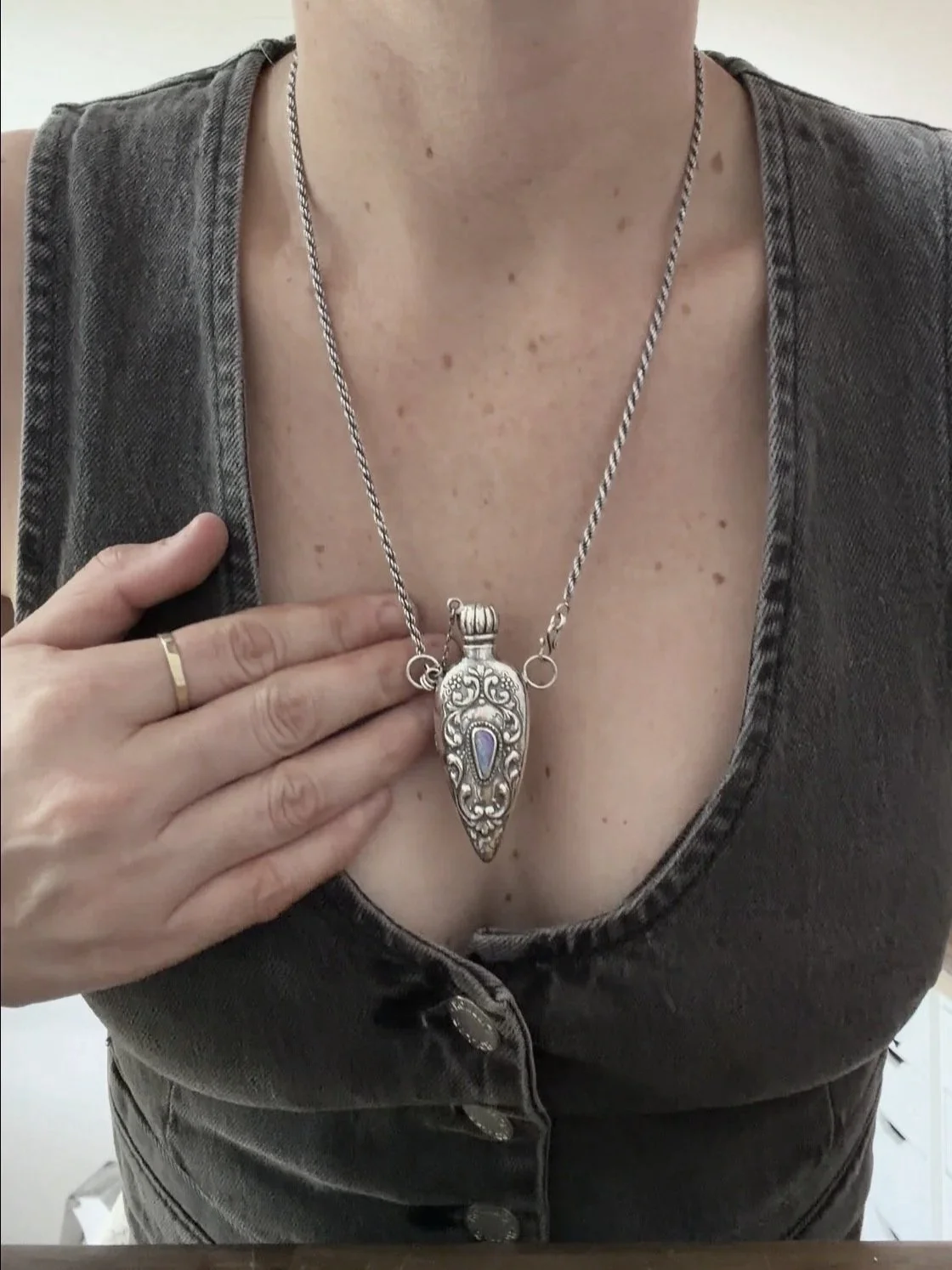
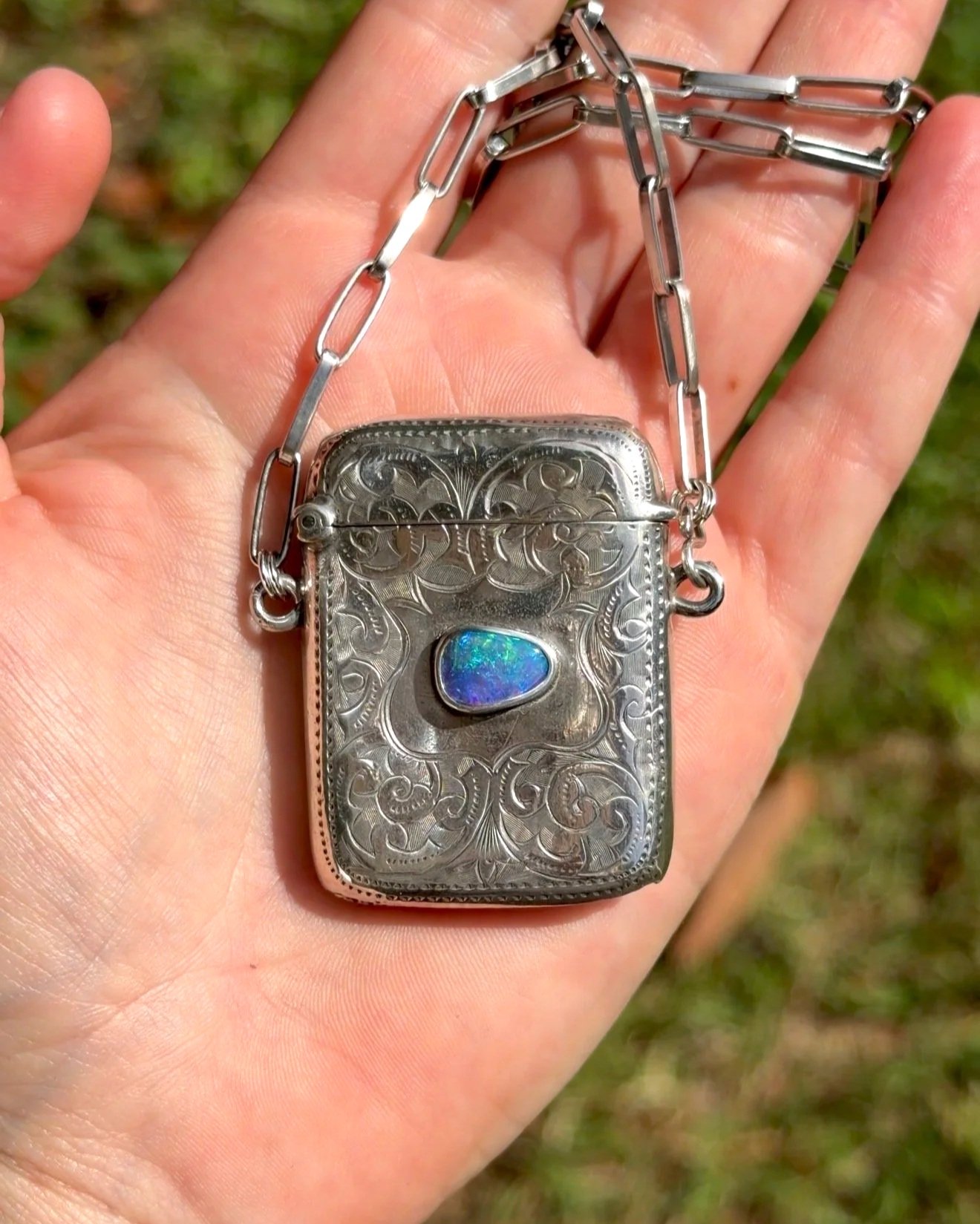
 Image 1 of 3
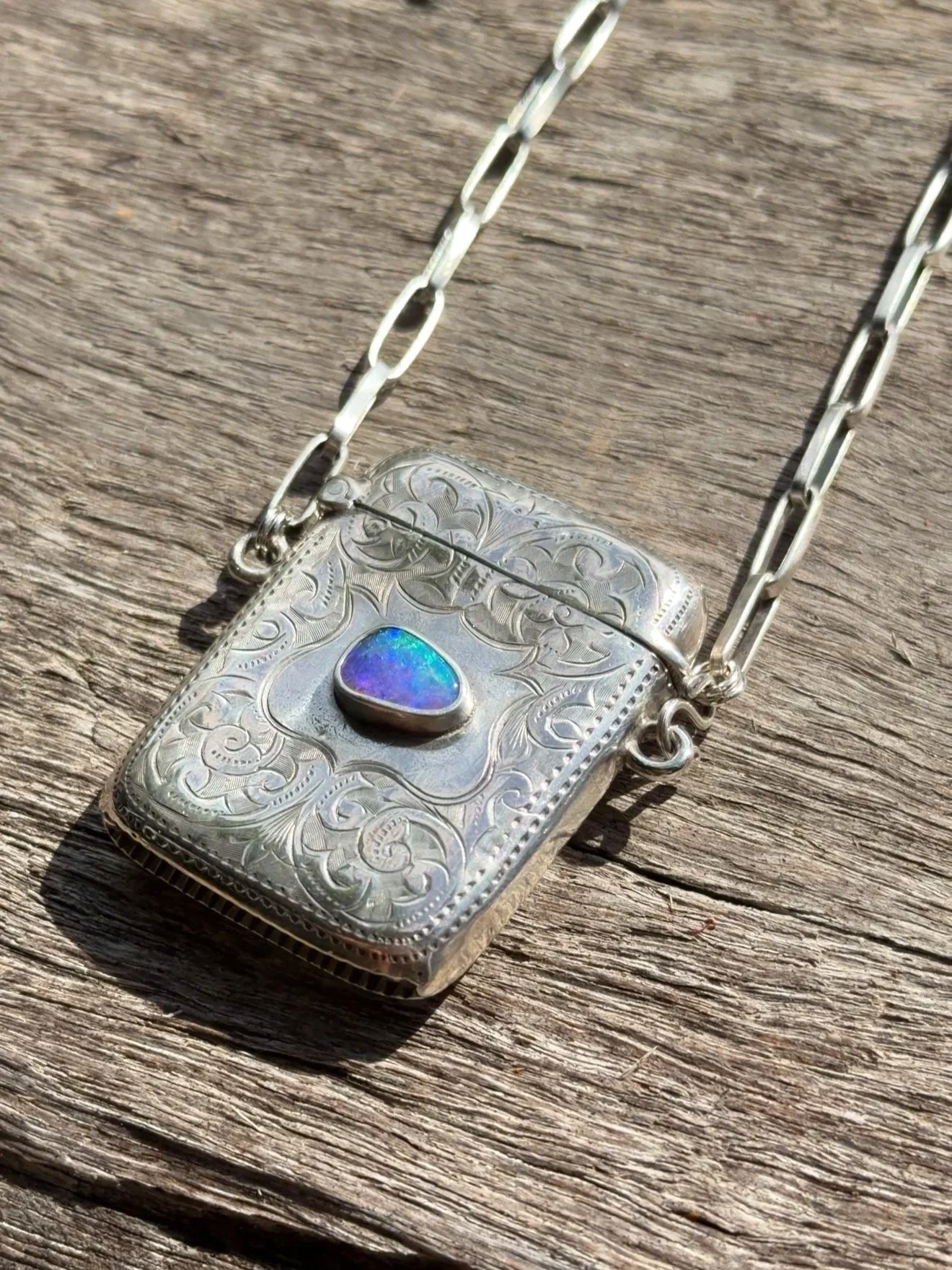 Image 2 of 3
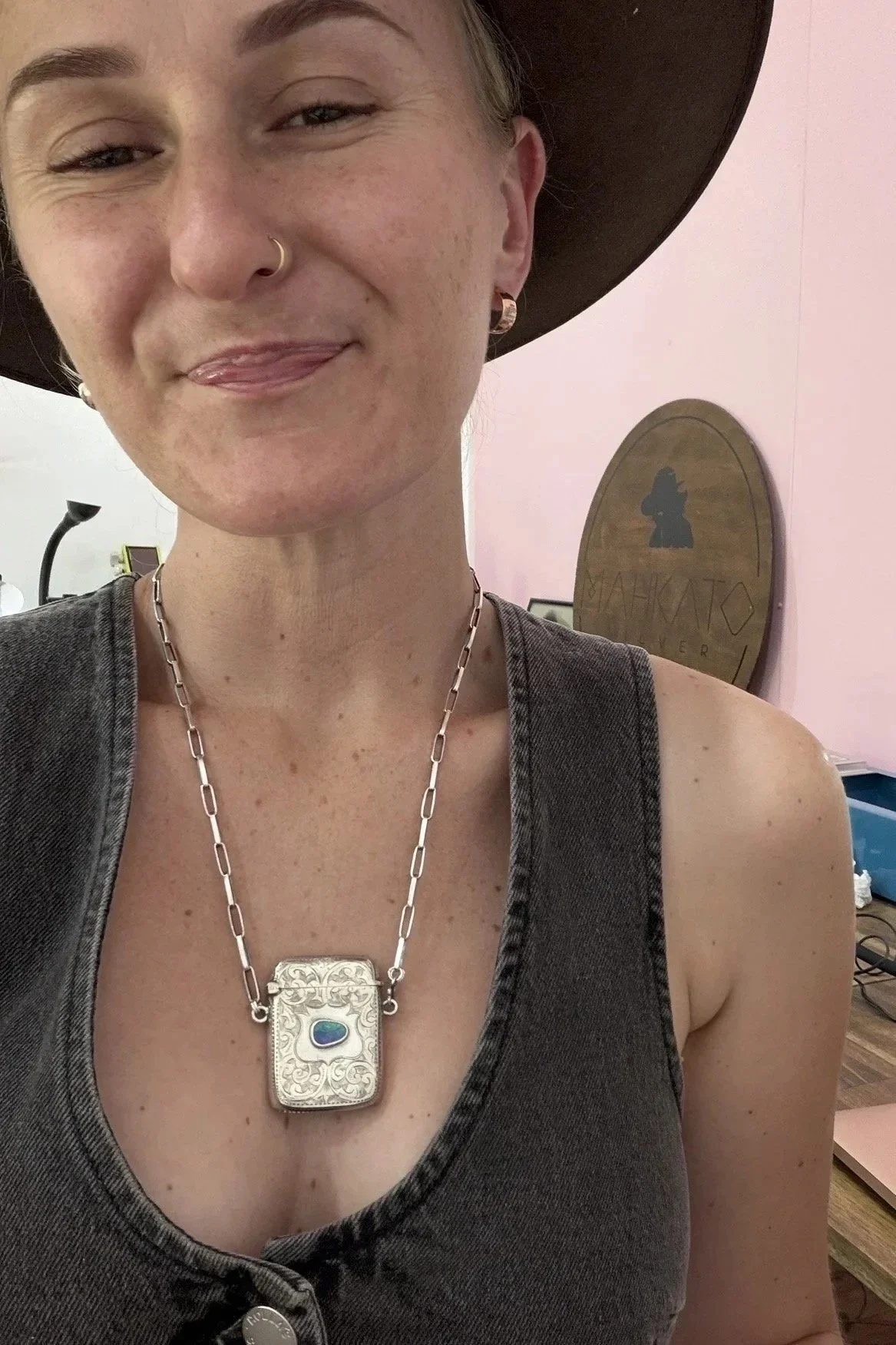 Image 3 of 3
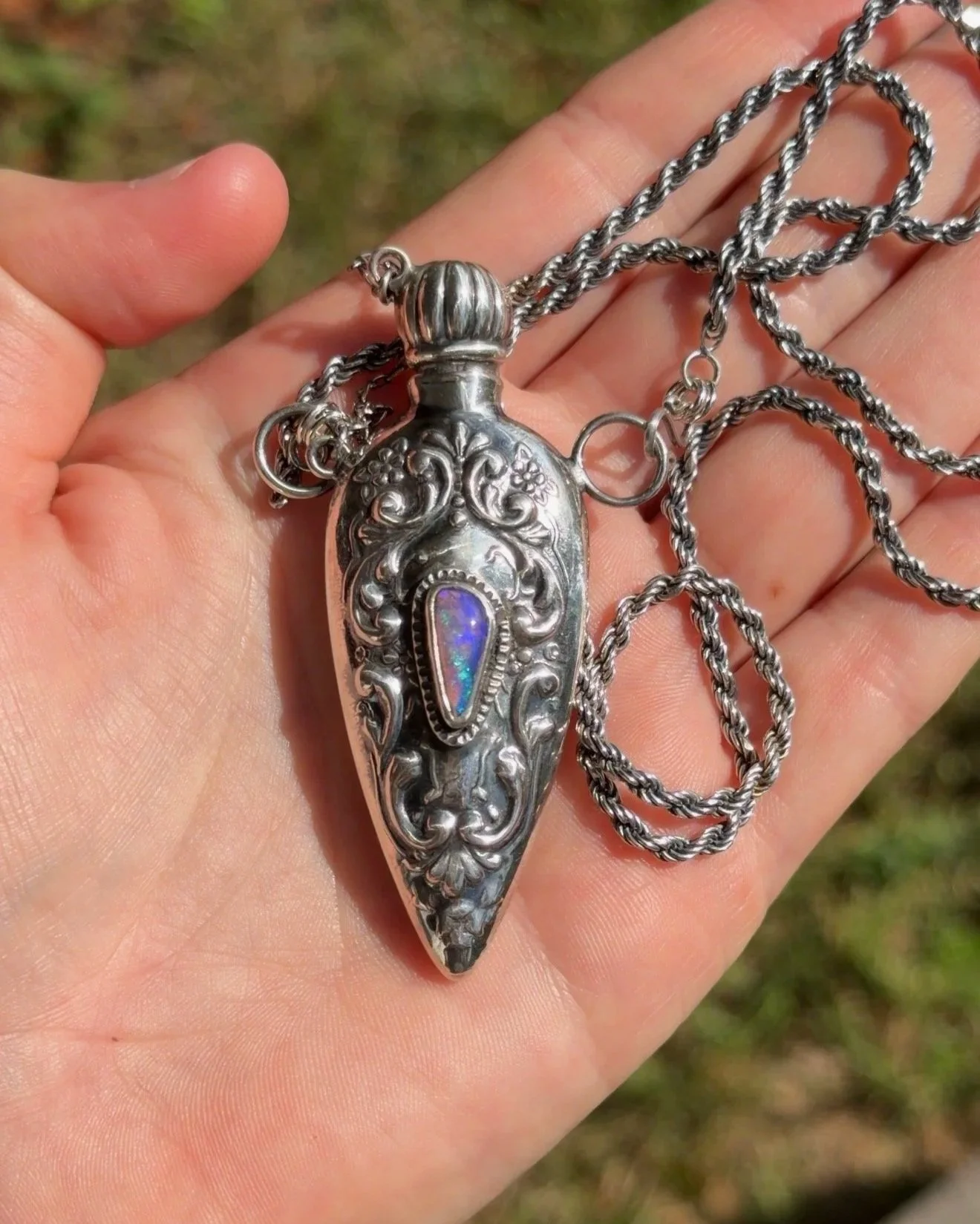
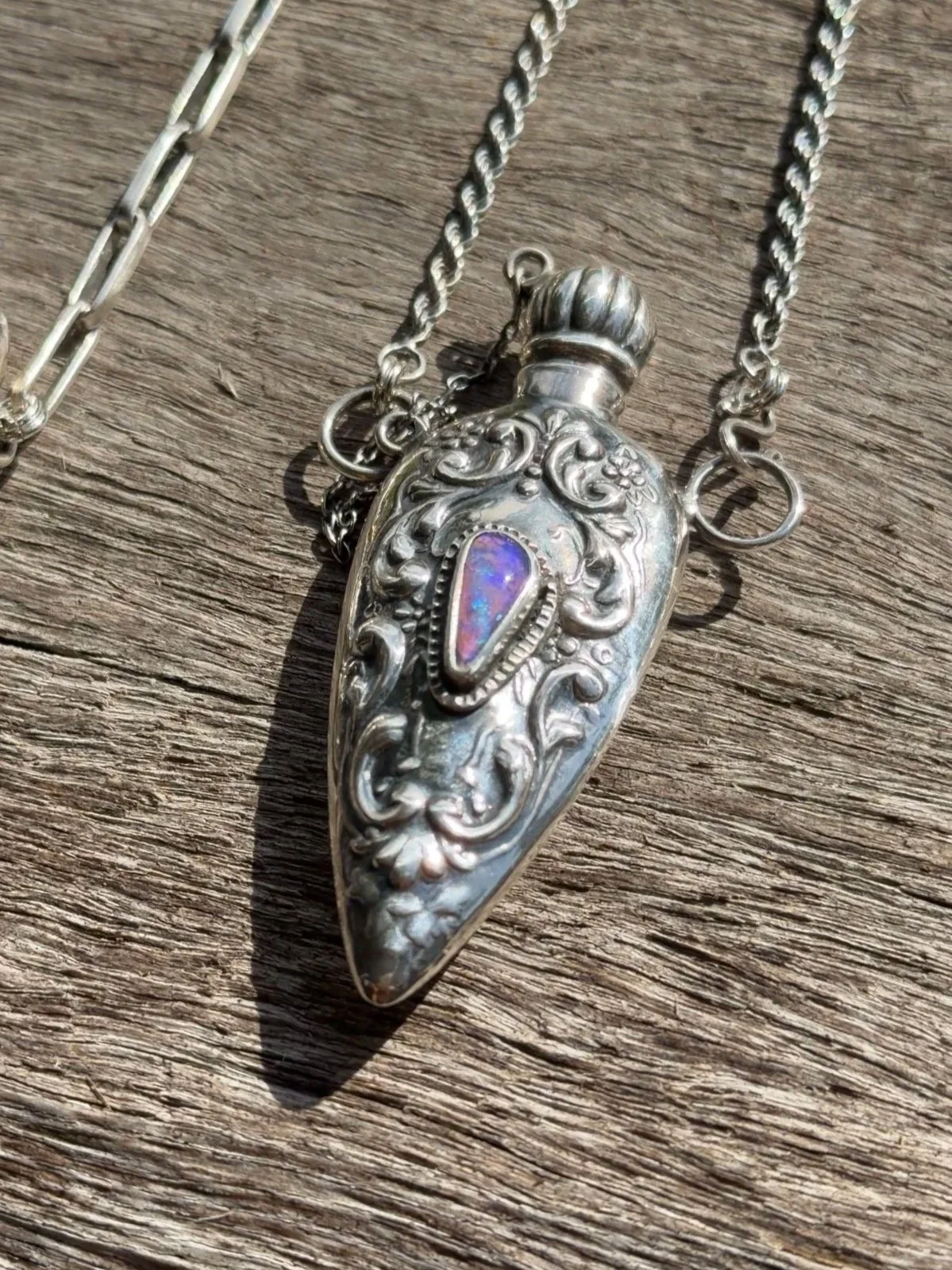
Originally popular during the Victorian era, vesta cases were small decorative containers designed to hold matches (called “vestas”) and protect them from moisture. Often worn on chatelaines or watch chains, they were both practical tools and stylish personal accessories, frequently crafted from silver and intricately decorated.
Many antique vesta cases also carry hallmarks — small stamped symbols that tell the story of where and when the piece was made. These typically include an assay office mark, showing the city where the metal was tested for purity, a maker’s mark identifying the silversmith or workshop, and often a date letter that corresponds to the year the piece was officially assayed. These stamps act as a historical fingerprint, connecting each piece to its origin and craftsmanship.
This case in particular can be dated back to 1903 because it has 3 clear markings: the lion passant, the assay office mark, and the lowercase letter d.
Today, these vintage pieces are given new life as wearable keepsake memory boxes. While they once carried matches, they can now be used to hold tiny personal treasures such as a love note, a photo, sand from your favourite beach, flowers, or even dog fur - you name it. The case attaches to the chain by an easy to use ‘S’ shape clasp.
DEETS:
Case dimensions: 4.5cm (1.77 inches) long x 3.3cm (1.29 inches) wide
Chain length: 50cm (19.68 inches) - paperclip chain
Opal used: Solid QLD Boulder Opal
NOTE: This item is not air tight or completely waterproof, so if storing anything that can be damaged, it’s best to consider adding another layer of protection like a clip seal bag, or lamination of photos. This piece was also manufactured over 100 years ago, so there is inevitably evidence of wear and tear, but the case is in good condition.
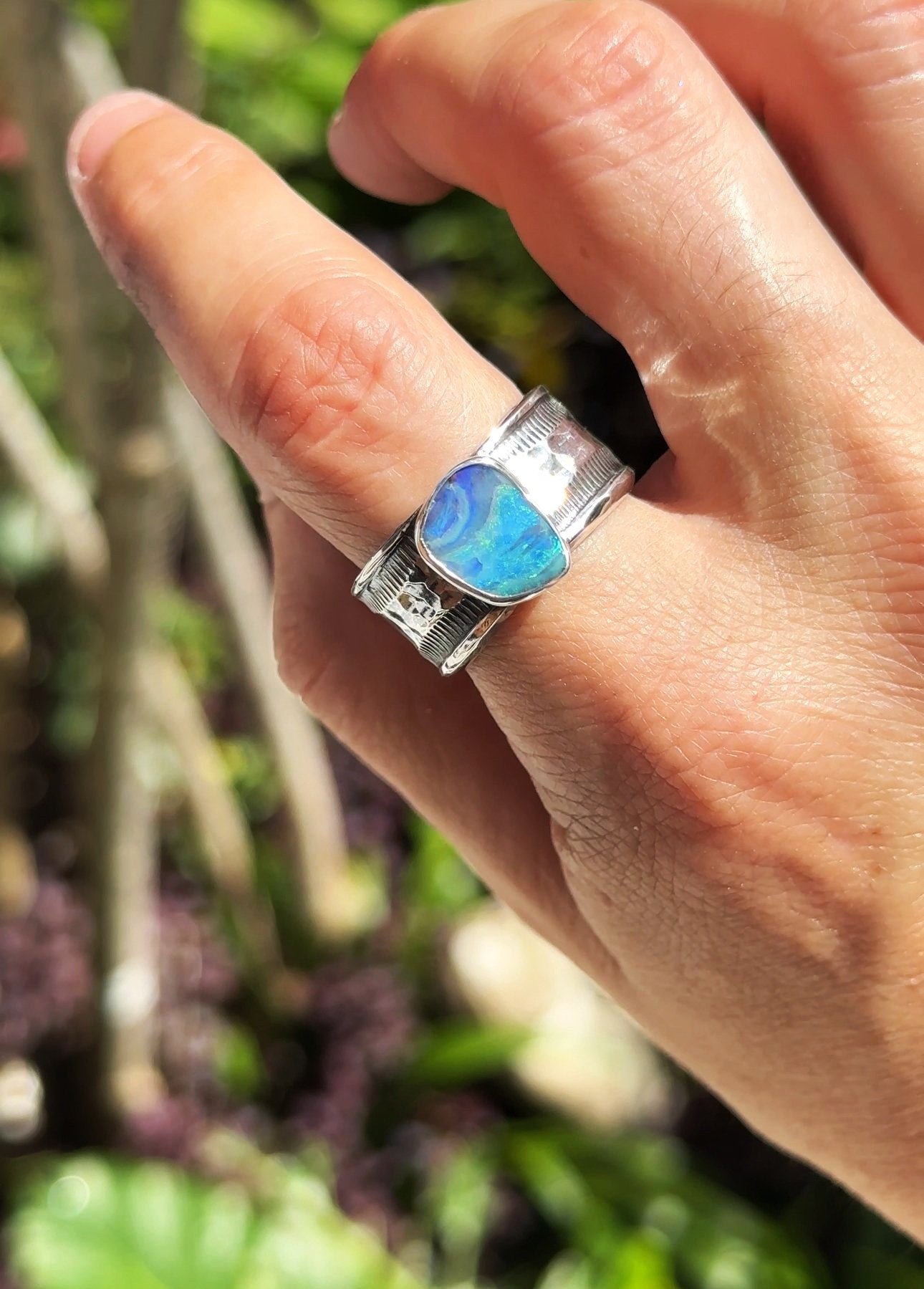
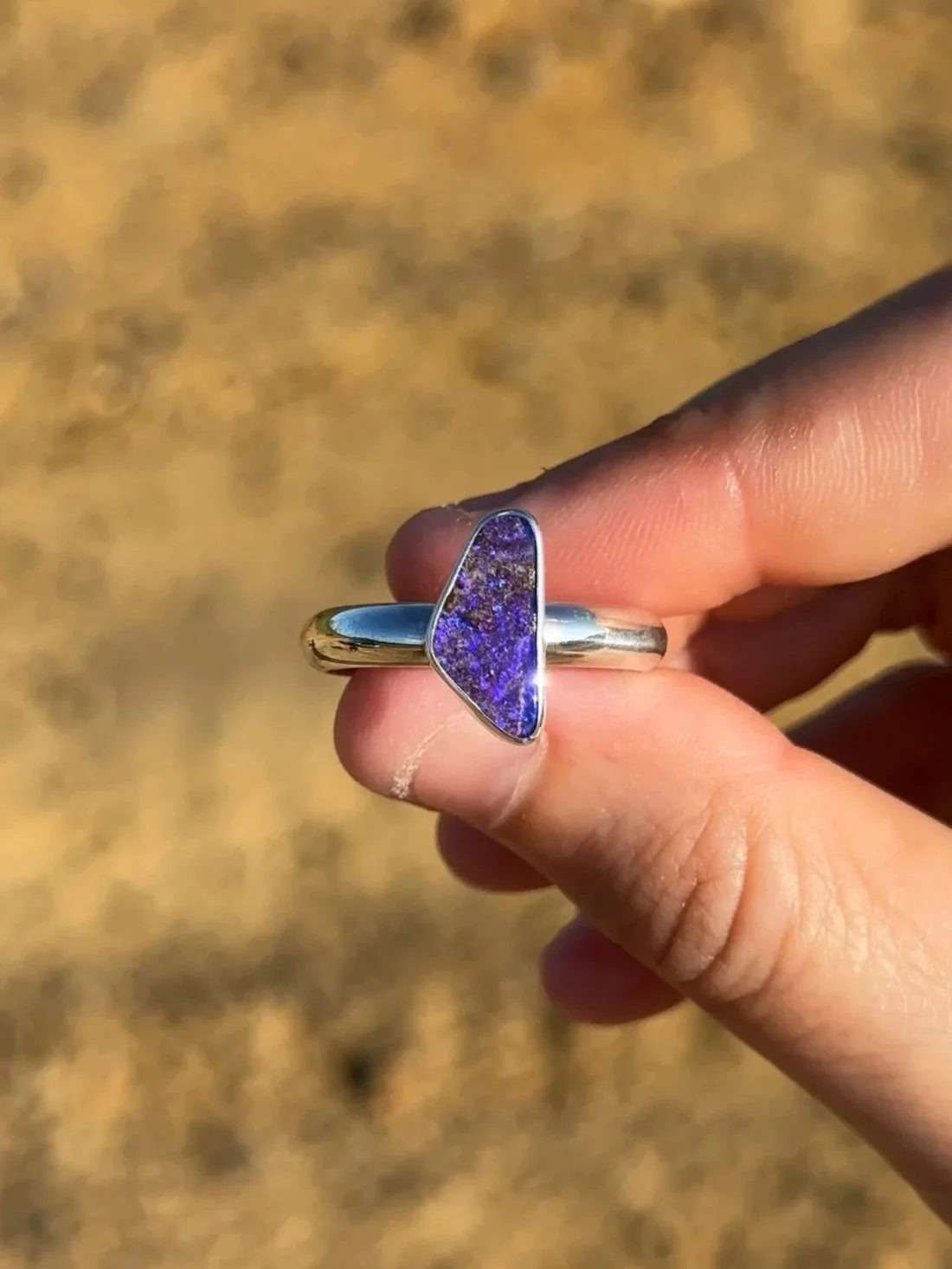
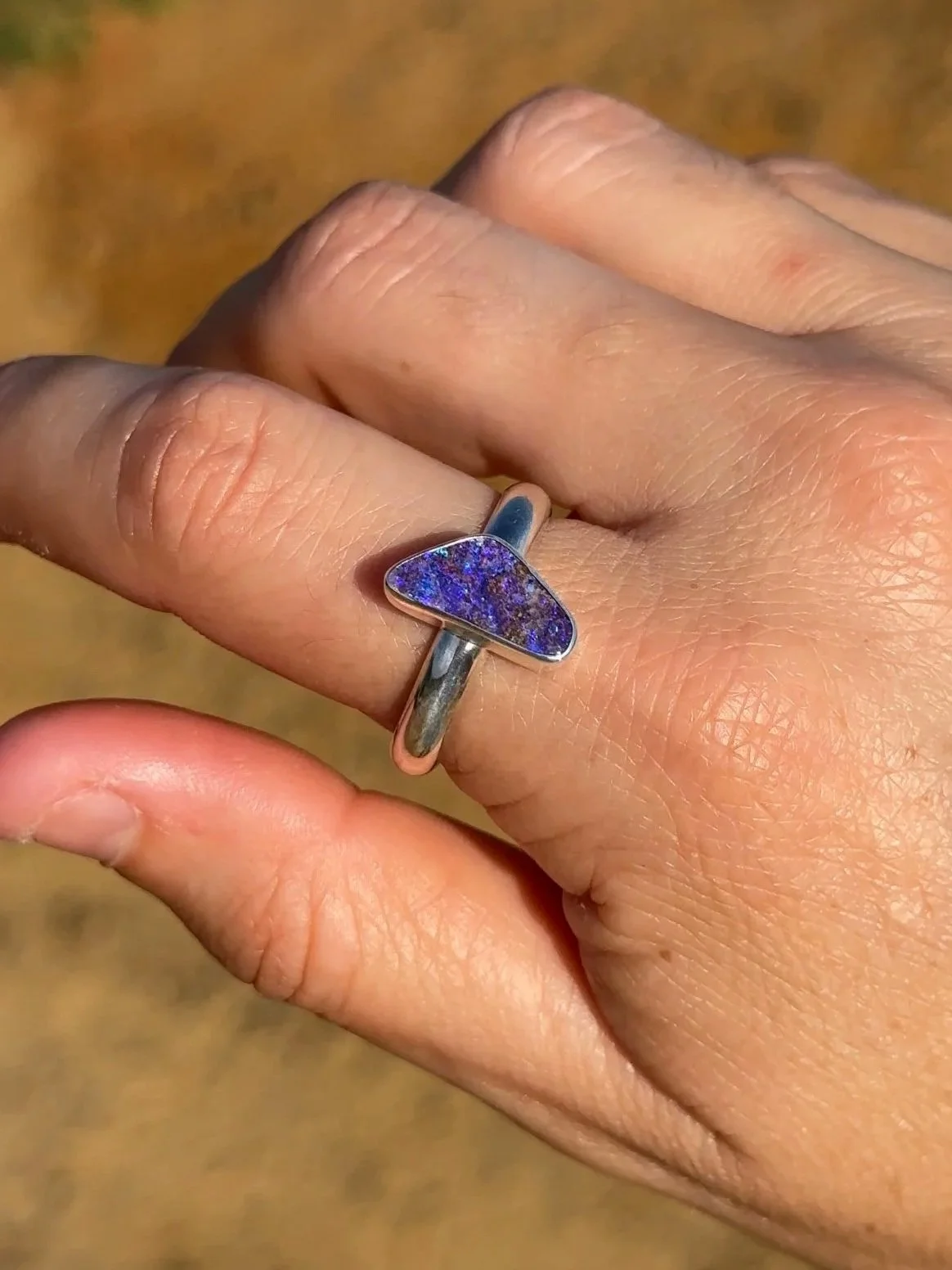
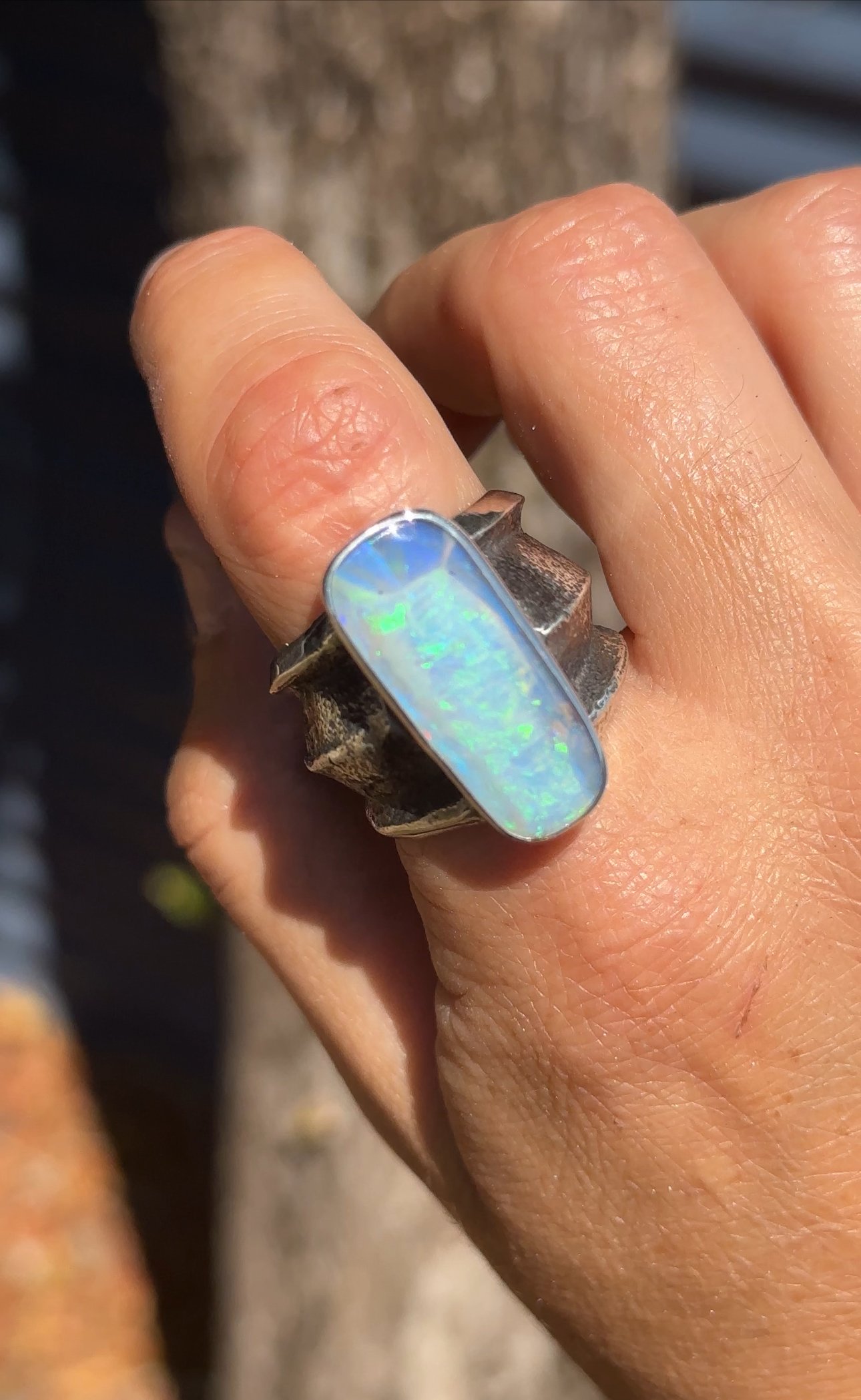
OPALS: Mahkato Silver only uses SOLID opals. The true colour of your opal ring may vary slightly to the photograph. The colour of opals varies greatly with light and shadow. It’s also important to note that they’re a naturally occurring material and might include natural ‘imperfections’.
Originally popular during the Victorian era, vesta cases were small decorative containers designed to hold matches (called “vestas”) and protect them from moisture. Often worn on chatelaines or watch chains, they were both practical tools and stylish personal accessories, frequently crafted from silver and intricately decorated.
Many antique vesta cases also carry hallmarks — small stamped symbols that tell the story of where and when the piece was made. These typically include an assay office mark, showing the city where the metal was tested for purity, a maker’s mark identifying the silversmith or workshop, and often a date letter that corresponds to the year the piece was officially assayed. These stamps act as a historical fingerprint, connecting each piece to its origin and craftsmanship.
This case in particular can be dated back to 1903 because it has 3 clear markings: the lion passant, the assay office mark, and the lowercase letter d.
Today, these vintage pieces are given new life as wearable keepsake memory boxes. While they once carried matches, they can now be used to hold tiny personal treasures such as a love note, a photo, sand from your favourite beach, flowers, or even dog fur - you name it. The case attaches to the chain by an easy to use ‘S’ shape clasp.
DEETS:
Case dimensions: 4.5cm (1.77 inches) long x 3.3cm (1.29 inches) wide
Chain length: 50cm (19.68 inches) - paperclip chain
Opal used: Solid QLD Boulder Opal
NOTE: This item is not air tight or completely waterproof, so if storing anything that can be damaged, it’s best to consider adding another layer of protection like a clip seal bag, or lamination of photos. This piece was also manufactured over 100 years ago, so there is inevitably evidence of wear and tear, but the case is in good condition.
OPALS: Mahkato Silver only uses SOLID opals. The true colour of your opal ring may vary slightly to the photograph. The colour of opals varies greatly with light and shadow. It’s also important to note that they’re a naturally occurring material and might include natural ‘imperfections’.